


Journal
How Many Tiles Are in Mahjong?
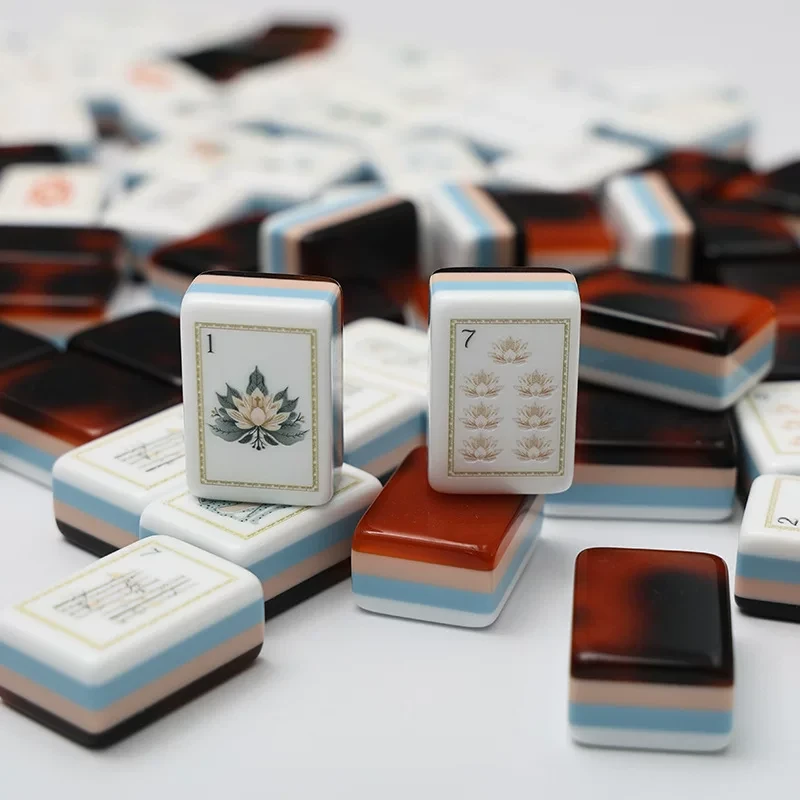
If you’ve ever opened a Mahjong set and wondered why some have 144 tiles while others have 152, and still others have 160, you’re not alone. The number of tiles in Mahjong isn’t fixed — it varies depending on which version of the game you’re playing. Understanding these differences is key to choosing the right set and mastering the rules.
At LumaMahjong, we believe that every tile tells a story. Whether you’re a beginner or a seasoned player, knowing exactly how many tiles are in your set can elevate your game. Let’s break down the most common Mahjong variations and their unique tile counts.
Standard Tile Set: The 136–144 Base
Before diving into regional styles, it helps to know the core tiles found in almost every Mahjong set:
- Suits (108 tiles): Dots (Circles), Bams (Bamboos), and Craks (Characters) — each numbered 1 to 9, with four copies of each.
- Honor Tiles (28 tiles): Four Winds (East, South, West, North) and three Dragons (Red, Green, White) — also four copies each.
That gives you 136 tiles. Many traditional versions then add Flower and Season tiles (typically 8 total), bringing the count to 144. From there, regional rules add or remove tiles to shape the gameplay.
Mahjong Variations and Their Tile Counts
1. American Mahjong
Tile count: 152–160
Distinct features: Includes 8 Jokers, plus Flowers, Seasons, and special tiles.
American Mahjong has the largest standard set. Jokers act as wild cards, but they can only be used according to the annual National Mahjong League (NMJL) card or International Mahjong card. This variation is highly social and creative — you constantly adapt your hand based on the card’s rules. The extra tiles allow for flexibility that other versions don’t offer. At LumaMahjong, some tile sets include an additional 2 jokers and 6 blank tiles.
2. Chinese Mahjong (Traditional)
Tile count: 136 or 144
Distinct features: No Jokers. Flowers and Seasons are optional. Pure skill, memory, and efficiency.
Chinese Mahjong is the original form. The 136‑tile version offers a fast, precise game where every draw matters. Adding Flowers/Seasons (144 tiles) introduces small bonus points but no major strategic shifts. This is the blueprint for most Asian variations.
3. Hong Kong Mahjong
Tile count: 136 or 144
Distinct features: Fast pace, pattern‑based scoring, no Jokers.
Hong Kong Mahjong keeps the classic tile set but uses unique scoring patterns (like Pung or Chow combinations). The lack of extra tiles means games are sharp and competitive — perfect for players who enjoy quick, skillful rounds.
4. Japanese Riichi Mahjong
Tile count: 136
Distinct features: No Flowers/Seasons; instead uses Dora indicators (bonus tiles that boost scores).
Riichi Mahjong trades decorative tiles for a deeper scoring system. Every discard carries risk, and players must declare Riichi (ready hand) to maximize points. The streamlined 136‑tile set forces strategic precision.
5. Taiwanese Mahjong
Tile count: 144–152
Distinct features: 16 tiles per hand (vs. 13 in most styles), plus extra Flowers and Seasons.
Taiwanese Mahjong often includes additional tile sets, pushing the count toward 152. More tiles mean longer, more complex games with higher scoring potential. It’s an immersive choice for players who love layered strategy.
Quick Comparison: Tile Counts at a Glance
| Variation | Tile Count | Key Features |
|---|---|---|
| American Mahjong | 152–160 | Jokers, Annual card, wild cards |
| Chinese Mahjong (Traditional) | 136 or 144 | No Jokers, optional Flowers/Seasons |
| Hong Kong Mahjong | 136 or 144 | Fast, pattern-based scoring |
| Japanese Riichi Mahjong | 136 | Dora indicators, Riichi declaration |
| Taiwanese Mahjong | 144–152 | 16 tiles per hand, longer gameplay |
Why Tile Count Matters
- Smaller sets (136 tiles) = faster games, more emphasis on probability and memory.
- Larger sets (144–152 tiles) = more room for creativity, longer hands, and higher scores.
For example, switching from Chinese Mahjong (136) to American Mahjong (152) adds 16 tiles — including Jokers — which completely changes how you build hands. You go from pure matching to wild‑card strategy.
Which Mahjong Set Should You Choose?
At LumaMahjong, we recommend starting with a 144‑tile set if you want to explore multiple variations (Chinese, Hong Kong, Taiwanese). If American Mahjong is your passion, look for a 152‑tile set with Jokers. And for purists who love Japanese or classic Chinese rules, a 136‑tile set is ideal.
Ready to Play?
Now that you know how many tiles are in Mahjong — and why it varies — you can pick the perfect set for your next game. At LumaMahjong, we offer high‑quality Mahjong sets for every style, plus free resources to help you master the rules.
Whether it’s 136, 144, 152, or 160 tiles — every game starts with a single draw. Make yours count with LumaMahjong.
👉 Visit our shop to find your ideal tile count.