


Journal
How to Master the Charleston Solo
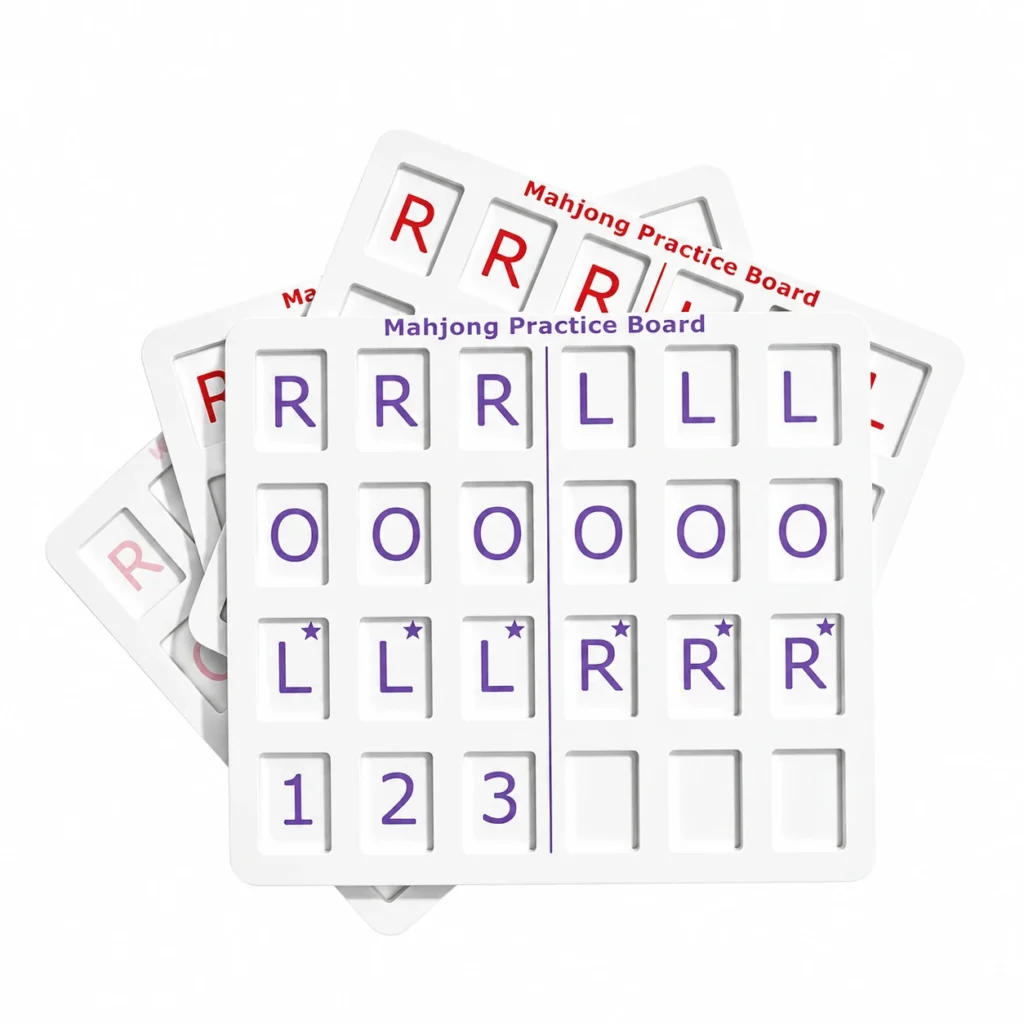
Do you want to sharpen your Mahjong skills without waiting for a full table? A Solitaire Mahjong Practice Board lets you train alone, practice the famous Charleston tile exchange, and build winning hands at your own pace. Whether you’re preparing for a competitive game or just love the rhythm of tile swapping, this solo method is a game‑changer.
At LumaMahjong, we designed our practice board to mirror real‑game pressure while giving you complete control. Follow this step‑by‑step guide to start your solo training today.
What Is a Solitaire Mahjong Practice Board?
It’s a specialised board with marked spaces (R, O, L, L*, and numbered courtesy slots) that guide you through the Charleston — the tile exchange ritual used in American Mahjong. You play against the bag (random draws) and aim to form a legal Mahjong hand within 25 turns. The board records your discards and helps you track progress, building muscle memory for real games.
Step‑by‑Step: How to Use the Practice Board
1. Setup & First Draw
Draw 13 tiles from the bag and arrange them on your rack (a rack is optional but recommended). Place the board in front of you.
2. Begin the Charleston – First Half
First discard round: Choose 3 tiles from your hand and place them face‑down on the first row of the board in spaces marked “R”. Then replenish your hand with 3 fresh tiles from the bag.
Second discard round: Select another 3 tiles to discard and place them on the second row in the first 3 spaces marked “O”. Replenish your hand with 3 tiles from the bag again.
Third draw: Draw another 3 tiles and add them to your rack. On the next round, an optional blind pass is allowed (you may skip choosing tiles if you wish).
3. Middle of the Charleston – L* Stage
Now decide how many tiles you want to discard – from 0 up to 3. Place them in the spaces marked “L*”. Then replenish your hand with exactly the same number of tiles you discarded.
4. Two Choices – Stop or Continue
Option 1 – Stop the Charleston: Proceed directly to the Courtesy Pass (see step 5).
Option 2 – Continue the Charleston: Choose 3 tiles to discard and place them in the spaces on the top row marked “L”. Then repeat the same pattern as the first half (including an optional blind pass on the final round). After finishing, move to the Courtesy Pass.
5. Courtesy Pass
Select 0 to 3 tiles from your hand and place them in the courtesy pass spaces (marked 1, 2, 3). Replenish your hand with an equal number of tiles from the bag.
6. Reset the Board
Empty all tiles from the board back into the bag. Shuffle or shake the bag thoroughly.
The Main Game – Race to Fill 25 Turns
Now the real training begins. Your goal: form a complete, legal Mahjong hand before the board fills up.
- Each turn: Draw 1 tile from the bag. You may either exchange it with a tile in your hand or discard it directly. Place discarded tiles face‑up into the empty spaces on the board, one space per discard.
- Win condition: Form a valid Mahjong hand (according to the rules you’re practicing, e.g., American, Chinese, or Riichi) before all 24 spaces on the board are filled with discards.
- Last resort tile: After filling all 24 spaces, you are allowed to draw one more tile (the “Tile of Last Resort”) for a total of 25 turns. If you complete a Mahjong on this final draw, you still win!
- If you fail to make Mahjong within 25 turns, the game ends. Shuffle and try again.
Why Train Alone with a Practice Board?
- Master the Charleston: Repeatedly practice the discard‑and‑replenish rhythm until it becomes second nature.
- Speed up decision making: Learn to spot winning patterns under a turn limit (25 draws).
- No need for opponents: Solo practice fits any schedule – 15 minutes is enough for a full round.
- Track your progress: The board’s marked slots help you visualise discards and avoid common mistakes.
Which Mahjong Rules Can You Practice?
The practice board works for any variation where a hand is built from drawn tiles. It’s especially effective for:
- American Mahjong – perfect for Charleston drills and using jokers.
- Chinese / Hong Kong Mahjong – train pattern recognition and efficiency.
- Riichi Mahjong – practice tenpai and defensive discards.
You decide the winning hand criteria (e.g., from a NMJL card, a traditional pattern list, or Riichi yaku). The board only tracks your turns and discards – it’s completely flexible.
Pro Tips for Solo Training Success
- Use a timer: Give yourself 30–60 seconds per turn to simulate real game pressure.
- Keep a score log: Note how many turns you needed to win, or how often you succeeded within 25 draws.
- Gradually increase difficulty: Start with open‑hand practice (looking at all tiles), then move to face‑down draws for true randomness.
- Combine with strategy guides: Review common Mahjong patterns between rounds.
Ready to Play?
The LumaMahjong Solitaire Practice Board comes with marked slots, a durable bag, and full instructions. Perfect for solo players who want to level up before the next group game.
Train the Charleston anywhere, anytime. Every solo round brings you closer to a perfect Mahjong.
👉 Visit our shop to get your practice board – includes free digital rulebook.